Sunday, August 5, 2012

How to Talk of Types—and Why

26 12 01 AE 26 (25.3mm)  11.7g: this probably is a tetrassarion.  No magistrate's name.  Bareheaded, head to r.  AVT T AI ADRIA   |   ANTONEINOS.  Rev., Herakles, nude, head to l., weight on r. leg, his right hand resting on his knobby cudgel; over the left forearm, the Nemean Lion's skin.  NEIKOPOLEI  |  TON PROS IST.  The coin has been carefully but thoroughly tooled with metal tools on both sides and probably was heavily encrusted.  The metal is sound.  On the obverse, the relief is very high from the presumed cowlick at the top of the head through the cheek to the beard; its strike raised the plane of the reverse, so the dark area in the scan is the shadow side of a long convexity; perhaps for the same reason, the reverse strike is soft and weak (but the same is true on the smaller, AE 20, Sauroktonos); the type is, however, fine.  Not in AMNG I, 1: the two without magistrates' names at 25-26mm, 10.2f and 11.5g, nos. 1220 and 1221, have the river god and a normal Tyche; those with Zeno's name as magistrate all are small (19-20mm and, like the Sauroktonos, no. 1225, much lighter: the Gotha ex. is 4.05g).  Probably 4s and 2s.  The 30mm Nike writing on a shield, no. 1219, is 19.5g. and exceptional.  There may be another of the Herakles coin, but I have not seen it listed or published.  Now HrJ Nicopolis (2011) 8.6.14.1.
An art industry based on stock types
The die was cast by Pliny's calling famous works of art, that every cultivated person would know, the opera nobilia (whence I took the blog's name for essays on major works of art).  From the spread of printed books onward, the elder Pliny's chapters on famous metal and marble sculptures, culled from Hellenistic sources, were what one learned first.  They were in almost every course outline.  Well and good; one does need to know them.  As excavations produced unforeseen quantities of statuary, much of it copying or based on the named opera nobilia, but even more unnamable and variously related to the stylistic developments that the famous pieces stood for,  it became clear that, especially in the period between Trajan and Gordian III, when the Empire was richer than ever before (this is not the place to discuss the beginnings of serious monetary inflation), and the Greek Empire and north Africa were adorned with the great buildings many of which stand to this day, there was unprecedented demand for sculpture, both civic and private.
When I began to study the Greek Imperial coinage, it became clear to me, as an art historian, that the obviously statuary types on many reverses were only occasionally representations of the opera nobilia of Pliny but usually were based on statues such as every city possessed, produced in workshops where good marble was available, statues that were not creatively original but used stock poses and notions of appropriateness to an assortment of characters.  The workshops (Aphrodisias was only one of them) were capable of supplying what was desired, in a variety of manners.  That is why, in the handbooks by authors as recent as Georg Lippold or Gisela Richter, where coins were illustrated as evidence for famous statues, so few of the thousands of coins served the purpose.  The early post-Renaissance scholars, too, used coins to testify to the names in the texts, but in studying coins for their own sake I saw that, rather, it was the well identified statues, such as the Cnidian Aphrodite, the Apollo Lykeios, and the rest mentioned by Pausanias or Pliny or other writers, that  testified to the tiny and often skewed figures on the coins, not vice versa.  In short, the coins can give us a better notion of the full range of statuary that might be seen in the cities of the Antonine and Severan dynasties than the restricted number of large pieces that have escaped melting down for their metal or burning in the lime kiln.
I should like to use some Herakles figures as examples to discuss what I mean.  The young Herakles on the bronze coin at the head of this essay is, to the best of my knowledge, not secured to one of the famous names (I might think of the workshops, of which we know little other than their existence, that some of the sons of Praxiteles and Lysippos together formed, but that is only because Herakles is tall and slender and graceful).  It is distinguished by his resting his weight on a long cudgel held much as a Victorian gentleman might be shown with a walking cane.
from Sutherland, Roman Coins, London, Barrie & Jenkins, 1974, nos. 421-422.  BMCRE, no. 505.  Sestertius, 24.27g, D. 31mm.  L SEPT•SEV•PE   RT AVG IMP III.  Rev., his Dei Auspices (as in known statues at Leptis Magna), Hercules stg. l., weight on proper rt. leg, his r. leaning on long club and lion skin over his l. forearm; Liber pouring wine over panther.  TR P II COS II and in exergue SC.  (AD 194)
Quite obviously, the Herakles statue shown on the Rome sestertius where it is clearly labeled as one of the patron gods of Septimius is just the same kind of statue as on Antoninus Pius's coin shown above.  It is not surprising that an Antonine type of Herakles should be used for Septimius, who favored almost anything Antonine, though that is not to say that either the Herakles (or the Dionysos 'baptizing' his panther, a very common type) was new in the 2nd century CE.  But the sestertius does accord well with Septimius, on his provincial issues, being given Herakles reverses more commonly than any other emperor, and many of them are of just this type, which at Rome is used also on the asses, which being copper and smaller are not quite so clear, though Doug Smith's photo of mine is splendid.
It is noteworthy that the stance and bodily proportions of the statue of Dionysos are quite similar to those of Herakles, and Hermes, too, often presents just such a figure: only the iconographic attributes change, and, as the sestertius shows more plainly, Herakles has more athletic shoulders.  But this is the young Herakles, not the muscle-bound old hero.
17 01 03 AE 26 Marcianopolis, issued by Pontianus.  Macrinus, laureate, head to r. facing Diadoumenian, bareheaded, head to l.  AV[T K OPEL SEV |  MAKREIN]OS K M OPEL ANTONEINOS.  Heads as on Pick, no. 748 (which has stacked legend in obv. exergue, however).  Rev., Bearded Herakles, frontal, head to r., his right hand resting on his club (but so large and odd that Pick marks it ?), with the lion skin over his left arm, its tail hanging down to his feet.  VP PONTIANOV MAR  KIANOPOLEITON; the OV and the AR ligatures.  In the field at r. E.  Pick, AMNG I, 1, p. 243, no. 752, known to him only from the Sophia example, which does not preserve Pontianus's name and therefore not its ligate ending.  The head of Macrinus extremely refined.  This is HrJ Marcianopolis (2010) 6.24.14.3 (not properly a 'variant'  of 14.1-2, which represent the Lysippic Weary Herakles).
At Marcianopolis, the town that Septimius made his administrative center for the newly created Moesia Inferior, Macrinus, who succeeded (AD 217-218) Septimius and his sons, eager as ever to stress his continuity (which was specious) with Septimius, is given a Herakles reverse (issued by Pontianus) that is of this type, only the lion skin is more emphatically the Nemean, with its head and paws retained and its tail hanging down to the hero's feet.  What is critical for the type is the stance and the long club held elegantly at our left.  And it certainly is the same type, therefore, as on the coin of Antoninus Pius with which we began.
Three more coins seem to me to belong to this series, having all the stylistic peculiarities of post-Antonine standing figures, in which we begin to see the reappearance of misinterpretation of ponderation familiar from the Mars from Todi (see, e.g., in Ramage, Roman Art, Ch. 1:17 of the 1st edition.  Compare the big Septimius bronze from Cyprus, op. cit., Ch. 9:4—and on through Late Imperial and Medieval art), in which the lengths of the straight and flexed thighs are unalike, rather than the effect of bending the torso being carried through the whole body.
18 07 03 AE 25  13.04g  Nicopolis ad Istrum  Issued by Agrippa.  Macrinus, fully bearded, head to r.  AVT K M OPEL SEV  |  ER MA[KRINOS]--same die with one pi, round sigma and epsilon.  Rev., Nude Herakles (yes, under loupe there is a beard), laureate, standing frontal, facing r., leaning on his club in his r. fist, holding bow in his l. hand, Nemean lion's skin over his l. forearm.  VP K A[GRIPPA NI]  |  KOPOLITON PROS and in exergue ISTRON.  The sigma of PROS is round, that in ISTRON is squared..  Pick AMNG I, 1, p. 436, no. 1696, Taf. XVII, 17.  Imhoof's ex. 1 at 13,60g is even heavier.  HrJ 8.23.14.1

29 03 04 Æ27 13.34g axis 12:30  Nicopolis ad Istrum.  Issued by Longinus.  Diadumenian, drpaed bust (fringe on l. shoulder) to r.  Some specimens show armor on r. shoulder.  ---]DIADOV (stacked, ligate) | MENIANOS K (not same die as Pick 1855, but prob. that of 1832, 1836, 1839, 1841-3, 1848, 1861, 1870-1).  Rev., Herakles, unbearded and nude, stg. r., leaning on long club in his r. and holding the skin of the Nemean lion over his l. forearm.  VP STA LONGINOV NIKOPOL[ITÔN PR]OS I.  Pick, AMNG I, 1, 1855, describing and illustrating a single specimen in Munich, Taf. XVII, 13.  This coin links this Herakles reverse with the others using this obverse, including the Epquestrian reverse, no. 1870.  This is the most childish head of Diadumenian at N ad I, though another without the K at the end and the stacked diphthong are very similar, but within so short a span of months it may (or not) be due only to the artist.
Pick 1855, Taf. XVII, 13, but the obv. die is different.
Obv. die as 1833 (Zeus frontal) and 1836 (Demeter with snakes).   ???
Be that as it may, the plate coin ought to be in SNG Munich 7 now.
HrJ 8.25.14.1      

16 05 01 AE 26  Nicopolis ad Istrum  Elagabalus, laureate head r.  The obverse legend being poorly preserved, the identification is provided by the name of the magistrate, Novius Rufus, on the reverse, since the head is generically handsome.  AVT K M AVRE   |   [AN]TON[EINOS] (completed from Pick no. 1947, from examples in Gotha, Loebbecke coll., and Vienna.  Rev. Nude Herakles frontal, head l., resting his r. on his cudgel, his l. arm akimbo with the lion's skin over the forearm.  Like nos. 1944-6, but here the hero is bearded, and the distribution of letters also is that of no. 1947: VP NOBIOV ROUPhOV NIKOPOLITON PROS ISTR and in the field O N, on either side of Herakles.    HrJ (2012) 8.26.14.6 
Also, we see differentiation from the "pure" di auspices Hercules on the Rome Sestertius expressed in the treatment of the lion skin over the figure's left forearm, which may also hold a bow, though the same statuary type and elongate proportions still prevail.  Indeed, for what it's worth, Elagabalus having this same Herakles tends to support the suspicion that it is specially Severan in Moesia Inferior.
Still, the Herakles that first appeared, issued by Pollenius Auspex, on Septimius's tetrassaria of Nicopolis as part of Moesia Inferior (and which reminded me of the di auspices on the Rome sestertius) not only has his face to his l. but throws his weight to his left leg, so that he might even be a
side view of the Herakles actually shown in side view on numerous coins.
11 09 01 AE 27.  Nicopolis ad Istrum.  Septimius Severus, laureate, head to r.  Issued by Pollenius Auspex.  AV KAI SEP  |   SEVEROS P[ER]--nothing discernible after pi on this example.  Rev., Herakles stg., head turned r., leaning on his club in his r., with the Nemean lion's skin over his l. forearm and holding a bow in his l. hand.  VPA POL AVS[PIKOS NIK]OPOLI PROS IS.   Pick, AMNG I, 1, no. 1257. HrJ (2011) 8.14.14.1 
With Caracalla appearing about the same age as on the coins connected with his marriage to Plautilla, when Aurelius Gallus was governor of Moesia Inferior (i.e., not long after AD 200) we have coins issued for both Septimius and Caracalla with Herakles in this posture on the reverse, only instead of the bow (which would allude to the Stymphalian birds) he holds apples on his palm, and with the head no longer aligned with the supporting left leg the pose seems hardly heroic.  This relaxed posture is much commoner than the coins that I have in hand would suggest.
10 09 03 AE 26  10.46g  axis 7:00  Nicopolis ad Istrum.  Issued by Gallus.  Septimius Severus, laureate, head to r.  AVT L SEPTI   |   SEVEROS P (obverse of Pick 1316, AMNG I, 1, p. 367, and Varbanov I, p. 162, no. 2121, illus.).  Rev., Herakles stg. to r., his right leaning on a club (knobby?), with the Lion's pelt over his l. arm; it is not possible to see a bow in the dense corrosion on the reverse, and the legend, with GALLOV spelled out, does not quite match Pick, AMNG I, 1, p.365, no. 1308, though the exergue matches: VP AV GALLOV  |  NIKOP[----  and in the exergue PROS I.  But for the rare and beautiful obverse die, this ugly specimen might look suspect.  The lettering of the reverse does match that of the Cybele-on-lion reverse that occurs with the obverse die in Varbanov's example.  HrJ 8.14.14.5.
04 06 03 AE 26 11.35g  Nicopolis ad Istrum  Issued by Gallus. Caracalla, laureate, draped bust to r.  AV . K . M AV[R]   |   . ANTONINO and perhaps C (the sigma buried in folds at bottom?).  Rev., bearded Herakles, nude, stg. r., leaning on a large knobby club in his r., with the Nemean Lion's skin over his l. forearm and in his l. hand holding Apples of the Hesperides.  VP AV GALLOV  |  NIKOPOLITON .  and in exergue PROS I.  Pick, AMNG I, 1, p. 407, no.  1551 for the reverse.   The obv. die with a separate final sigma that Pick discusses there is a head and the name is spelled Antoneinos.  This portrait bust resembles, rather, that of nos. 1539, ff., i.e., the Gallus Sauroktonos, but for the lacking or 'hidden' sigma, as on 1548.  HrJ 8.18.14.6
It is interesting at this point to compare a coin of Philippopolis, probably more nearly contemporary with Tertullus at Nicopolis, so less than five  years earlier.  It is almost certainly Varbanov III, no. 1161, citing Mushmov's P.A,M., the 1924 catalogue of the coins at the Plovdiv Archaeological Museum, no. 275.

AE 28  13.20gr  axis 6h.  AV K L SE    VÊROS  (the legend at left needs lots of help from Varbanov, who must be using Mushmov 1924).
Rev. ÊG ST [BAR]BAR  0V PhILIPPOPOL and in exergue EITÔN (to the best of my ability). Rotated in good light, the coin does clearly exhibit that big, broad Phi.  The epsilons are round-backed.

That Herakles reverts to face to l., but he holds the club as on the two issued by Gallus at Nicopolis and to hold apples, but on the palm of his r. hand.  His déhanchement  is as great as on the Gallus coins.  It would be not only lazy but wrong to call these Philippopolis and Nicopolis coin simply variants of each other; it would be refusing to consider what the differences might mean (even if one cannot answer).  That they are closely related, however, seems certain.
Sharing all the motifs of the Philippopolis coin (head facing our left, his left hand resting on club, weight on his left leg—but restored to contrapposto, heel aligned with head—lion skin on his r. forearm and apples on r. palm), this is exactly the type of the Philippopolis coin; only the style is quite different.
Though for the most part Nicopolis coins are prettier, the best pentassaria (marked E in field) issued by Pontianus are almost masterpieces, as this one is:
28 04 03 AE 27 (max.)  Marcianopolis.  Issued by Pontianus.  Macrinus, laureate, and Diadumenian, confronted draped busts.  [AV K] OPEL SEVE MAKREI[N]OS (the omicron split in the strike) K M OPEL ANTONEINOS K.  Rev., Herakles, beardless, frontal with head to l., resting long, knobby club in his l. on ground, holding apples on his extended right hand (the lion skin hangs from his r. forearm).  VP PONTIANO | [V] MARKIANOPO and in exergue LITON.  In field at r. round E.  Pick, AMNG I, 1, p. 242, no. 751 (both dies), pl. XVII, 14.  HrJ (2011) 6.24.14.4.


Here is another confrontation of a Philippopolis, this one signed by Barbaros, and a Nicopolis, signed by Tertullus; it is obvious that the term of Barbaros in Thrace coincides (there is other evidence than this) with that of Tertullus, the best determined for Moesia Inferior (from AD 198 to c. 201), but they cannot be proven to coincide perfectly.  With these coins, the Philippopolis Herakles looks more 'original' to me, but it is hard to say, since they might, rather, have shared a prototype (engraved gems and repoussé silver always come to mind).
The Philippopolis coin, signed by Barbaros, was cited by Varbanov III, no. 1167. as in the Gavralliov collection and the portrait is one of the finest.  The Nicopolis one is signed by Tertullus (the Bucarest specimen is described by Pick, AMNG I, 1, p.l 360, no. 1276—but that coin has a bust with cloak over armor.  The Tertullus is now HrJ 8.14.14.2 (2012), including this specimen.
Philippopolis even offers (Varbanov III, no. 1356), on a charming 18mm copper, Herakles standing in much the same way but with the Infant Telephos sitting on the lion skin.  One almost wants to think that, by identifying with Herakles (and adopting Telephos, so to speak), Septimius was both justifying his own claim to dynasty and his Antonine claim in naming Caracalla, as emperor, Antoneinos, by the spurious parentage to Commodus, that egregious identifier with Herakles.
11 01 02 AE 18  Thrace, Philippopolis.  Septimius Severus, head to r. (whether laureate not preserved).  ----]  |  SEVERO.  Rev., Herakles, unbearded, stg. frontal, head turned to l., r. arm akimbo and also evidently holding his club; on his l. forearm, the infant Telephos who reaches up to his shoulder. [PhI]LIPP  |  OPOL[ITON].  Almost certainly quotes a Pergamene statuary type, why at Philippopolis quite unknowable.

Finally, in this series, here is a Septimius that must be one of the last issued by Aurelius Gallus for him, with a Herakles that most kindly might be called rugged—but not like the ruggedness of the "Farnese" type.
AE 27 Septimius Herakles; Gallus  9.81g  axis ~6:00.  Obv. legend as Pick 1306; Rev. is Pick 1308   HrJ (2012) 8.14.14.8       
Now we turn to Septimius's Caesar, whether or not his little Telephos, still bareheaded.  One of the nicest small coppers, 15mm.:

22 06 06 Æ 15.5mm  3.71g  axis 1h.  Nicopolis ad Istrum.  Caracalla, bareheaded, bust to r.  M AV K  |  ANTÔNIN (acc to Berlin and Sofia).  Rev., Bearded Herakles stg. r., leaning on his knotty club in his l. and, with the Nemean lion's skin over his forearm, holding an apple (?) of immortality in his l. hand.   NIKOPOL  |  PROS IST (Pick does not record the lambda on his specimens).  Pick, AMNG I, 1, p. 398, no. 1498, citing Berlin Cat. 79, 37 "ungenau" and Sofia.  The Herakles (nos. 1386-1389) on coppers of Septimius are not listed with the apple.       HrJ 8.18.14.12

Though most of them show Herakles with a bow (alluding probably to the Stymphalian Birds), the statuary type, meaning the figure's stance and the assembling of its parts, would be the same as on the foregoing, including that of Philippopolis for Septimius, but it looks as if the engraver of the AE 15 (its weight shows that a slightly larger diameter would not be surprising) reconsidered the Herakles as a work of art, as, of course, an artisan who cared for his work would be free to do.  It must date from slightly before Caracalla was made co-Augustus in AD 198.
03 05 04 AE 26  14.39g  axis 7:30  Nicopolis ad Istrum.  Issued by Gallus.  Plautilla, bust to r.  PhOVL PLAV  |  TILLA SEBAS (Pick 1632 for this die).  Rev. Herakles stg. to r., his r. hand resting on his club and his left, oustretched, with the lion skin and bow (this is the rather rare Pick 1631, for which the Naples specimen, described by Pick, clearly has a different obv. die).  [VP AVR] GALLOV NEIKOPOLITON and in exergue traces of [PROS I].  HrJ (2l011) 8.21.14.1.
Similarly, the Nicopolis coins with this kind of portrait of Plautilla, while not necessarily issued for the marriage in AD 202, are not likely to be much later, given the problems that quickly developed, and they do seem to form a set.  As with the Apollo Sauroktonos, it is remarkable that besides the usual empresses' types, such as the Aphrodite in the "Capitoline Venus" pose (naming its formal type; iconographically considered, it is one of many pudica Aphrodites), Plautilla, while the world was urged to rejoice in the union and the promise of heirs, at Nicopolis was given full-size tetrassaria in types usually reserved for males (types that even Julia Domna did not have, Herakles included).  Perhaps this has everything to do with her father's importance.

And now a Type with a Name (in fact, with several names)
Basel, Antikenmuseum, BS 204.  Head of a fine copy of Lysippos' Resting, or Weary,
Herakles (Hercules Farnese).  Heroic but not colossal scale, a very attractive
copy that should antedate the making of the colossal version made for the Baths of Caracalla in Rome.

The Baths were dedicated in AD 216.
For that and all the other data, well known, see the very well referenced article s.v.
Farnese Hercules.   Like many other such articles, of course, its variable point of view reflects 
copy-and-paste from disparate sources, but the data seem OK.

26 IV 00 AE18 (max D).  Nicopolis ad Istrum.  Caracalla; AV K M AV ANTONIN.  Rev. Head of bearded (Lysippic) Herakles to r. NIKOPOLITON PROS IS (Greek transliterated).  Pick 1594.  HrJ (2012) 8.18.14,17.

07 01 02 AE17 Nicopolis ad Istrum  Septimius Severus, laureate (?) head to r.  AV K L   |   SEVEROS.  Rev., Head of Herakles Farnese type (Resting Herakles).  NIKOPOLITON PROS IS.  Cf. Pick, AMNG I, 1, no. 1594 (Caracalla, laureate, but still a boy); not located for Septimius (but cf. no. 1358, with Helios head, where the obverse die has same short legend).  Herakles head not same die as my Caracalla of this type.  HrJ (2011) 8.14.14.28. 
There are further dies for coppers with the Lysippic Herakles head, but these are among the best.
My beginning with the head alone does not (as the linked article makes clear) suggest any doubt as to the very distinctive stance but to the heavily copyrighted best images of it.  It is one of those famous works that persons who seldom consider Lysippos, or his Late Classical age, or even Caracalla and his Baths, even think of––including most muscle-building establishments.  In the late 19th c., for example,  you could obtain a carte de visite albumen print from a collodion plate glass negative of the great Eugene Sandow posed and rather comically fig-leafed, with a huge faux leopard skin behind him, as the Farnese Hercules from the fashionable studio of Napoleon Sarony in NYC.  But the statue by Lysippos is proven by a number of pre-Roman-Empire copies to have become famous almost immediately, and, as we have noted, Septimius certainly encouraged identification with the by then universally famous hero that Commodus had identified himself with—and with whose 'rumored' paternity of Caracalla Septimius was happy for dynastic reasons to re-name his heir Antoninus (no wonder, perhaps, that Macrinus followed suit for Diadumenian).
The standing Herakles with which we began here may well have been auspex, but the very specific and famous Weary Herakles was different, and more.

26 03 03 AE 27 Nicopolis ad Istrum  Issued by Tertullus  Septimius Severus, laureate, head to r.  AV.K.L.S   |   SEVEROS P (the legend, with head, of Pick 1278, 1283).  Rev., Herakles, the "Farnese Hercules" type, to r., very husky, resting his club butt on a very solid rock.  From 7:00 o'clock, VPA OOVI.TERTVLLOV NIKOPO PROS I, ending just before the V.  Pick, AMNG I, 1, p. 360, no. 1276, perhaps (known only from one example in Bucarest, though this obv. is no bust, and this rev. has no bow with the lion skin and two fewer letters in the ethnic.  Pick says that the rev. of 1276 is the same as on coins of Septimius and Caracalla and of Caracalla alone.  This reverse die may be new.  HrJ 8.14.14.3 (now, for images of additional specimens of this die-pair, see s.v. Herakles, Weary  in the alphabetized Study Album.
Note carefully, in the new editions (2011 in Bulgarian, and 2012, in press, in English), that 8.14.14.2–3, by reason of pagination in offset printing, includes in one box the plain profile view of a standing Herakles (see foregoing paragraphs) and the Tertullus Lysippic, Weary Herakles.  Tertullus had a couple of quite exceptional die engravers, and this is one of them, making the burly but athletic hero really memorable. Note, too, that the Bucarest specimen, the one that Pick knew, may have had a different obverse die.
19 03 03 AE~18  Nicopolis ad Istrum.  Septimius Severus, laureate, head to r.  AV KAI S[E]  |  SEVEROS.  Rev., Farnese type Herakles, stg. r., remarkably true to the type.  NIKOPOLI   |   PROS ISTR.  Not Pick AMNG I, 1 (= Cop SNG 2, no. 267), not one of the three following, but Lanz Auktion 97, May 2000, no. 707 (= Varbanov I, no. 1836).  Both dies seem to match, but the Lanz coin is VF on both sides.  HrJ (2011) 8.14.14.12.
Personally, from years of poring over these coins, I cannot doubt that the small copper is no later than the tetrassarion with its Imperial attitude in the obverse portrait, certainly not a Gallus coin.

I have often thought that sea-damaged marble copy of Lysippos's Weary Herakles (being from the Antikythera shipwreck and so older than the Baths of Caracalla, and apparently of the same Heroic but not Colossal scale as the original), for all its lamentable condition gives us a better feeling of the proportions, the stance, the attitude of an original by Lysippos.  It is athletic and no longer young, but it is not painfully, even comically musclebound, and its proportions suggest a living body.  Since the Farnese statue is early 3rd c. CE, assuming it was manufactured by Glykon for its place in the great Baths, we need to remind ourselves constantly that it was not work like the Farnese statue that made the creation famous.


11 04 03 AE 27+  Nicopolis ad Istrum.  Issued by Longinus.  Macrinus, laureate, head to r.  [AV] K M OPEL SEV   |   MAKRIENOS (same as nos. 1723, 1737, 1741, also with heads).  Rev., nude, bearded Herakles stg. r., his right hand on his hip, his left, with the lion-skin-draped club in his armpit and thus resting on a stone (the pose of the Hercules Farnese).  VP STA LONGINOV NIKOPOLITON PROS IS.  Trait for trait and letter for letter, Pick AMNG I, 1, no. 1759 and Varbanov I, no. 2699; judging from Pick, only the Sofia ex. has equal detail and complete legend, and Varbanov's is similarly struck to this one but more worn.  Now HrJ 8.23.14.3
14 I 00 AE26  Moesia Inferior, Nicopolis ad Istrum.  Diadoumenian, bareheaded bust to right.  Obv. legend, --]MENIANOS KAI  remains (the KAI complete).  Rev. Weary Herakles to right (for the rock, see Argos copy of Lysippos's Weary Herakles and Charles Edwards, in Personal Styles in Greek Sculpture (ed. Palagia and Pollitt), and fig. 88 there.  The magistrate's name is Longinus, and most of the city name is preserved.  Now HrJ 8.25.14.5.  
(Note: here and elsewhere, for coins that I described more than a decade ago, before I knew AMNG, before I knew Forvm Ancient Coins, I have left unaltered what I thought then, thinking it might interest other beginners: these are essays, not databases).
Even with the excellent engravers who worked on the dies made for issues signed by Longinus at the beginning of Macrinus's brief reign of 14 months, in AD 217–218, we see a tendency to make neat detail more important than the effect of a living hero in the form of a living human body, that revolution in Greek art of the Classical centuries, which we have taken for granted in the Art of the West as we know it.  We already saw, in a different Herakles made for Macrinus, the same shift to abandoning the illusion of life in light and motion in favor of clarifying all the identifiable parts, the shift that would characterize Late Antique and Medieval art.  Philosophers of art have been trying to rationalize this reversion to conceptual art for centuries.  I'd only say, with any confidence, that it is very hard for societies (or individuals!) to keep their grasp on difficult and complicated ideas.
21 03 03 AE 27  Marcianopolis.  Issued by Pontianus.  Macrinus, laureate, and Diadumenian, confronted busts.  AVT K OPELLI SEV MAKREINOS K M OPELLI ANTONEINOS, fuzzy but there.    Rev., Herakles Resting, the Farnese type, to r., with his hand behind his back, the Nemean lion's skin as padding for his armpit over the stump of his club, which rests on a pile of rocks, verifying Pick's description.  VP PONTIANOV (o-u ligate) MAR[KIA]NOPOLEITON, all round (exergue empty); E mark in left field.  Pick, AMNG I, 1, p. 243, no. 753, exactly.
HrJ 6.23.14.3 (from the second edition of Marcianopolis, but many of the HrJ numbers will remain the same or very similar: 6 is always Marcianopolis, 23 is always Macrinus, 14 is always Herakles, and the final number always is for a specific type; it is not to criticize them that I would urge everyone engaged in specialized work on the reverse types to follow Imhoof-Blumer's practice of considering the significance of differences, not least when statues that everyone knew had different connotations).
By the way, don't you agree that the same engraver may have made both Macrinus's Weary Herakles signed by Longinus at Nicopolis and, very shortly thereafter, that on the pentassarion (see the E in the field) signed by Pontianus at Marcianopolis?  It doesn't really matter (it takes a really stupid or dishonest cataloguer to try to run up the price of any artwork by 'naming' the artist); the Herakles figures made for Macrinus all show the same hints of a Late Roman art still to come.

The representations of Herakles in action would have been based on pictures, rather than statuary, in most cases and therefore are not discussed here.  Also, I have left out study coins that are hardly legible, and, need I add, the selection discussed here, though I think adequate, is not intended for a catalogue (for which see all the pre-existing and forthcoming catalogues, not least the English edition of Hristova and Jekov, Nicopolis, perhaps available even as I write.

Tuesday, 7 August:  Yesterday evening I proofread this essay, correcting typos and making minor clarifications.  I also added keywords, which will help Google searches.

Thursday, June 28, 2012

Abolute and Illustrative

So many of the questions that arise in addressing this question are difficult to address.  But here are some caveats: it is not a question of right or wrong or of true and untrue or even of important or unimportant, relevant or irrelevant (which could change from one decade to another).  The answers that I intend to explore all can be argued but without proving anything.  That examples may be at once 'absolute' and 'illustrative' doesn't matter.  Whether there is recognizable subject matter is not to the point.
What I am interested in is very much a question of my own generation, but I think that it may interest others, if they read this.  I have been reading the last part of Bertrand Russell's Autobiography, when he was in his seventies, eighties, and nineties.  One cannot help but notice how much more, in old age (he died in 1970, age 98), he was impelled to reiterate the great Causes of his life, even verbatim.  Very few of us are aristocrats or famous philosophers, but the sense of urgency in old age may lead to essays that are simply boring: I hope not.

In the mid-20th century decades, not only was theoretical mathematics opposed to accounting, and descriptive musical compositions, like Leroy Anderson's Sleigh Ride or von Suppe's Light Cavalry Overture, opposed to music not at all descriptive, like J. S. Bach's Art of the Fugue or Anton Webern's string quartets, but in particular in the visual arts Absolute was opposed to Illustrative.
In the visual arts, perhaps theosophy is in some sense the subject matter of the purest Mondrian of the 1930s, but, on the other hand, the abundant recognizable objects in Judy Chicago's Banquet do not make it any less illustrative of its verbal, even philosophical, ideas (the linked images are surely copyright) than Mondrian's work is.  French art of every post-Renaissance period is abundant in representations of well set tables, and the Matisse family as much as any other cared for this side of French domesticity, but for Matisse as a painter the well set table became 'absolutely' a Matisse painting (there are many images available, too).  Simply, it isn't recognizable objects, or their absence, that differentiates Absolute and Illustrative.
Also, this question has nothing to do with loose, impressionistic painting rather than exact, linearly executed painting.  When de Beers got Raoul Dufy to do some open-color water colors for their full-page advertisements in up-market periodicals in the 1950s, those water colors did not ask to be appreciated in the same terms as the first open-color that made him famous.  And, on the other hand, the obvious relationship of Matisse's Joy of Life (the Barnes one, that for so long was so hard to get to see) to pastoral idylls by Puvis de Chavannes does not dilute or compromise its place in the category of Absolute art.  By the way, however, where the de Beers advertisments are concerned, this essay has almost nothing to do with the interest or virtues of advertising art, or any other applied arts.  Whatever one thinks of the huge Dutch paintings of tables laden with food or with "fur and feathers" ready for the kitchen, they are quite different, in the terms I'm trying to address, from Zurbarán still lifes, which are also quite exact.  Indeed, even among the Dutch food paintings as a category, some of them are Absolute.
(Why not go to Google's wonderful Art Project for images to consider?  Only 20th-century works are generally copyright, especially the fashionable ones which Google couldn't get.  Zurbarán is most easily accessed by his name—though they sometimes go by first name—and the Dutch by going to Dutch museums.  It is utterly wonderful, and with some practice you can handle the elaborate interface.)
It is at least a quarter century since I read C. S. Lewis's attempt to differentiate literary from not-so-literary writing.  The useful thing I remember from it is that it is a question of how the work itself demands (in the case of literature) to be read.  Also I remember someone writing of architecture (perhaps Nicholas Pevsner) that though a great tithe barn may be wonderful and beautiful, and a work commissioned from a well known architect may be forgettable or ugly, the line that the writer drew between Building and Architecture is just that, between vernacular building and the personal ideas of an architect who thinks of himself as such.  You may say, there are difficulties here, but I would agree with the importance of the non-judgmental distinctions.
The Cleveland Museum of Art has one of my favorite Poussin paintings, a Holy Family.  Surely, as a religious subject, Illustrative.  But it is this painting that made me remember that C. S. Lewis essay.  Sometimes what the artist did is so unmistakably meant to be understood and enjoyed as Absolute art that the latter prevails.  Even a painter considered more pious than Poussin, Raphael Sanzio himself,  may do one Holy Family after another whose intellectual visual content is deliberately prevalent; it was his tondo, the Madonna della Sedia, that riveted my attention as a small child; he had, of course, patrons who valued what later came to be called Absolute painting, at least as much as the subject.
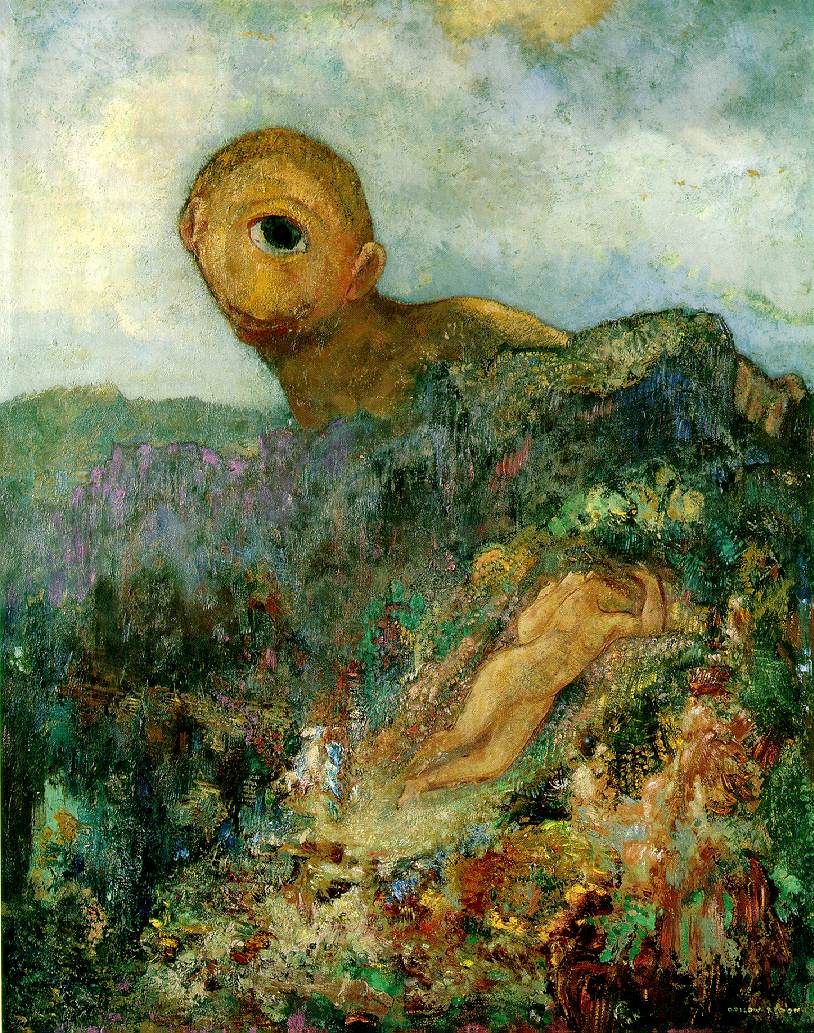
By Absolute, of course, is meant that the work's value is not engaged with the associations of its subject matter.  I have often wondered whether it was that Raphael print, given to me as a reward for perfect attendance at Sunday School, that put me on the way to specializing in Greek art.  I have learned to appreciate all sorts of illustrative art, often illustrative of literature or expressive of mystical ideas, as with Odilon Redon, or even political ideas or the spirit of an age, like the railway stations and social life in Manet and the Impressionists, but the Absolute works have conditioned the way I see them.
What most interests me is understanding why, when almost all the rest of humanity is interested in art as illustrating or standing for something else, and in discussing or explaining art betray their way of seeing it (even to the point of explaining Edward Weston's Peppers sexually, just to cite one), a few of us, myself included, have become formed, without any special training (and indeed over the objections of Sunday School teachers in the case of Tintoretto's Susannah and the Elders, the Vienna painting when it was on tour in the USA), to enjoy almost all art for its absolute qualities, feeling that I see the artist's own mind, even admitting that our Norman Rockwell, at his best, can be taken as an artist more than as an illustrator.  Is the tendency innate?
And I'd like to propose that differentiating the absolute qualities in visual and musical and poetic works is worth thinking about.  Who wants to be distanced from Sumerian and Greek, from Chinese and Islamic, and any other works of visual art simply because they may represent or illustrate cultural beliefs different from one's own?  Who doesn't want to have the pleasure of understanding why Chardin's painting of a boy blowing soap bubbles is as much more satisfying than any Dick and Jane illustration of soap bubbles as Raphael's Madonna is than what usually comes on a commercial Christmas card?

It is so difficult to write clearly enough!
P.S. But, key idea, non-objective and absolute are not the same idea.  Some artists have been more than others inclined to the Absolute, though.  Go to Art Project (see above) and think about it.  It is not formal emphasis, either, that governs Poussin, but his own vision that governs his own use of it.
It's like, the statement Rose is Rose is Absolute, but a rose placed on a wedding altar is a symbol of something else, and "Roses of Picardy" is a song less about roses than about the sadness following World War I.
Chardin's boy blowing soap bubbles is in the Metropolitan Museum in NY, and you can just Google that subject.  It is a good example of a painting with absolute values dominating that sells like hot cakes for its subject matter's associations.


Monday, April 16, 2012

Macron helping us to see the Pillar Idol

How odd that Ernest Gombrich in Art and Illusion should feel that this is still "conceptual" art!  Op. cit., Part II, Ch. IV, p. 131.  He is discussing the Judgment of Paris cup in Berlin, and he is puzzled by the "almost pictographic clarity of form that Greek art inherited from Egypt".  I was shocked a half century ago by the paragraph from which this comes, though generally I am very comfortable in being brought to see as Gombrich did.

For reference, from a later reduced photocopy of the excellent 19th-century drawings for the Wiener Vorlegeblätter, here are both sides of Berlin cat. no. F2290. The Munich collection is more often reproduced, but for this cup (which Jane Harrison, who seldom remarked on the beauty of her visual documents, thought perhaps the loveliest of Greek vases), if you have Pfuhl's Malerei und Zeichnung der Griechen, or any of a number of other books, side B with only dancing maenads is illustrated there.  Frickenhaus did illustrate both sides

From my old teaching files (scanned from a slide taken from an unnamed source).  Side A of the cup Furtwängler cat. no. 2290.  The other side, with only dancing maenads, is reproduced in many books.

(1) First, what the drawings of the pillar idol represents: what sort of support, what sort of mask, what sort of garments.  Macron, uniquely, shows it almost obliquely, i.e., in 3/4 view, except for the profile mask, itself exceptional.  Though we have several Dionysos masks, life-size or larger, of stone or terracotta, it is not certain that any of them MUST have been used for a pillar idol; of course, they would have been colored, with dark hair and eyes and a red mouth.  Either the mask was formed with the beginnings of shoulders and chest, or a cross-bar or broadening of the main support has to have held the garments, which consist of a full linen chiton, the standard undergarment for both sexes, and a glorious himation, with border patterns and leaping dolphins either woven in or embroidered on the wool (paint is not to be excluded, but such a rich garment will have been expected to last for many a year).  I imagine that the ivy crown on Dionysos's head is living ivy, but it could have been gilded metal, of course.  Stuck in behind the shoulders are other branches, plainly from living plants, on which pierced bread is supported.  I do not think this bread is so flat as pita or a tortilla, but I can't help thinking of the Easter braided loaves, of leavened egg dough and with red-dyed eggs embedded, or the unbaked as well as unleavened disc of soul food brought to the cemetery on All Souls' Day (the latter, of course, made of whole grain soaked in honey, would break under their own weight, if used in the manner seen here; I only meant that in current practice analogous special loaves are prepared).  I don't know what the bread means, but it is shown frontally, i.e., full circle, on either side of the frontal mask on a number of the "Lenäeenvasen".  The old, old drawings of Macron's kylix are not prevented by curvature of the profile of the kylix from showing the straight, utterly unatomical, wooden post both under the lower edge of the chiton and above the head, and, the more important in a draftsman like Macron, there is no hint of real shoulders (let alone arms) or real bodily mass inside the garments: only the mask is really anthropoid.  Iconographically, Macron's pillar idol is canonical (though this kylix does not show the table with stamnoi on it that the pictures on actual stamnoi show), but to me, after a lifetime with Greek vases, it fairly proclaims that he is showing the sort of thing that a particular group of women would themselves have rigged up, particularly in the bread stuck through by the branches.  So how like a herm?  The herm exhibits at least one body part, the genitals, and it has something like stubs where arms belong,  and it is not clothed, especially not richly and heavily clothed (though, much, much later one thinks of the herm in winter shivering in no more than a chlamys on coins of Bithynian Nikomedia):


27 07 07  Æ18  3.79g  axis about 6h.  Bithynia, Nikomedia.  Antoninus Pius.  Herm, humanized and protected from cold(?) given the upper body of Hermes and wrapped in his chlamys.  This comes with three reverse dies, RG 66, 67, and 68.  This is the plain one, 66 (MÊTROPOLE | NEIKKO{MÊDEI); 67 has the kerykeion propped against the herm, and 68 has the prow of a ship.  A charming conceit that I'd like to know more about.


(2) Now we can move on to the second question, that of conceptual representation, taking care to distinguish 'conceptual' from 'conventional'.  In rendering the parallel folds of the pillar idol's himation and in rendering the naturally crinkled thin linen of the women's chitons, almost like a seersucker, Macron relied on conventions gradually introduced and perfected in the generations of Exekias and of the red-figure Pioneers (of the last quarter of the 6th century BCE), though he took them to the breaking point, much more so than other vase-painters of the 480s.  Also, whenever possible, he draws the legs fully inside the drapery, and in the maenad at right in the cropped detail photograph it is downright necessary, since she is running to the left and turning in her torso to turn her head facing to our right, and the action of her legs, obviously based on observations from life, is new (I think, unexampled), and could not be guessed by the viewer from the contours of the blousy chiton alone.  I mention this first, because it makes the contrast to the straight falls of inert cloth on the pillar idol all the more striking.  That choice was neither conventional nor conceptual; he was showing us (and abandoning the purely frontal view, which is a cheap way of showing how wooden this temporary icon was) some women's  own festival Dionysos figure.  In the 19th-century line drawing we cannot see where he used diluted glaze-paint where the linen chiton ballooned so much that in outdoor sunlight it would become almost transparent.  Not fully convincing, you say?  Macron (and, may I say, the Brygos Painter, too, in his own way) would risk showing what he observed alive, what interested him visually, in any way that he could.  We must not for a moment forget the medium and the curved surface he was using and that every step that the best vase-painters of this generation took was unprecedented.  Yes, of course, there are sone stress folds in the statues of the dynasty of Akkad, really arresting intellectual innovations on the sculptor's part, on the nearly life-size headless statue from Susa of the king Manishtusu in the Louvre, and in Dynasty XVIII Theban tomb paintings there are some breathtaking experiments in representing what one sees.  But these breakthroughs are heartbreaking, too, since in both places they yield to conventional rendering, in Neo-Sumerian Mesopotamia and in the Ramessid dynasties in Egypt, and none of these earlier experiments, of course, was accessible to Greek artists.  It was as if they had never been.  But just in the generation of Macron and the Brygos Painter, not forgetting that there was painting on perishable wood panels that we can never recover (and we must not presume that Etruscan work, let alone tombs, can stand in for Greek easel painting, nor indeed any tomb paintings or votive panels), but fully evidenced on the best vases some of whose painters may not have been confined to the potters' quarters, we are entering the age of just the kind of art that concerned Gombrich (and in his own, quite different, way Deonna, who called it le miracle grec): it is what we call Western Art, though it has always had to struggle.  It is more than simple eidetic rendering of what you see.  It is the artistic side of the science of optics.  It is art grounded in the empirical, but art that realized, as if in the intelligence of its midwives (so to speak), that to look natural and 'real' to everyman it had to be visual experience mastered by the artists and reconstituted in intelligible forms.  Phidian drapery and anatomy in the Parthenon pediments (I don't know whom H. W. Janson was remembering when he called it the expression of the pure poetry of Being, but it pretty surely was German).  It is NOT naturalistic.  A wordsmith like Buffon, asserting that Style is the Man Himself, and insisting that of course he didn't mean the visual arts that are purely imitations of what one sees, unwittingly confessed to being style-blind!  But he was right about Style.  Our experience of seeing and moving in space, like our experience of seeing others, both to create portraits and to make crowd scenes and landscapes, or to show the loveliness of drapery responding to the body that wears it, all these things need to be understood visually and made (literally) memorable and meaningful, that is to be expressive of our own minds as artists and so far as possible accessible to other human minds, is obviously related to the way that our visual minds, by the work of our brains, create memories both true to experience, in one sane sense or another, that are coherent (that cohere in those little grey cells of ours), satisfying and helpful to our mental life in enabling us to tie together the everyday and the seemingly transcendent.  What about photography?  It was when it realized its own possibilities that it became able to do what the other visual arts do, not before (except here and there among the geniuses of 19th-century photography).  Unless it does that, it is just illustrations for some catalogue.
This is not the place to discuss Egon Schiele's women, which I've known for nearly a half century.  I want to keep this as short as I can, but Macron is remarkable, too, in his rendering of women.  Not only do half of them (and sometimes on other vases, too) show the whole body in the drapery.  That body is feminine in structure and contour at a date when others just put female breasts on a boy's body (not having equal access to naked girls); Macron likes the female body.  At a date when they had just learned not to make breasts like halves of lemons, Macron in the flute player at left in our detail shows the slack shape of moist chiton cloth and through the opening shows the beginning of the side of the breast.  That may be unique.  Macron does not have the Brygos Painter's grasp of structure, but his interest in the sensuous properties of the life that he observes is very rare.  I mean, there are huge personal differences among the masters of any period, in any medium; think how different Berg and Webern were.  By the way, that altar (again, not strong in its structure) is notable for showing its miniature painted pediment.  Also, I'd better add that thyrsoi are hollow fennel stalks with dried leaves attached to the top.  Euripides describes their rattling.
Monday, 16 April.  Have untangled one of the longest sentences (they permit writing a Post rather than a book-chapter).  I mentioned in the preceding having acquired Kandel's Age of Insight.  I still have about 150 pages of Kandel to read so cannot be sure that knowing from scans what really goes on in the brain contributes to understanding how memory and creativity work, but I am relying on what I learned from Antonio Damasio in rereading some chapters of Gombrich's Art & Illusion, in the latest of the revised editions.  Gombrich was deeply interested in personal and traditional Style.  If, when I have finished Age of Insight, I have discovered that Kandel has new knowledge, or not, of the biolognical relationship of memory and style, I'll write a Teegee Essay on that; Opera Nobilia is for the artists, and the 19th century was right in valuing the best painted vases as ranking with work that later centuries did on paper or canvas.


Tuesday, April 10, 2012

Eroticism on "the Grecian Vases from Stamnos"

Yes, the Stamnos is interesting!
The title of this Post is from p. 95 of The Age of Insight: the Quest to understand the Unconscious in Art, Mind, and Brain, from Vienna 1900 to the Present, by Eric R. Kandel.  NY, Random House, 2012.
 
When atomic scientists are lecturing on the results of their work at the Gizeh pyramids, or when neuroscientists are writing about ancient art, the humanities types should pay close attention.  At the end of this little essay, I'll say why.
Very early stamnos.  Oltos. BM E437 from Cervetri.  ARV2, p.54, 5.  Signed by Pamphaios as potter.  The Painter is Oltos, and the subject is Herakles wrestling Acheloos.  The stamnos is a vessel that can be covered but not sealed.  Its horizontal handles are for lifting it, and its broad foot is for stability.  In other words, it is a type of krater (assuming that you mixed some water with the wine, if, that is, you take the name very strictly), rather than an amphora.  We aren't sure that the ancients would have used the word stamnos for it.
First let me say something about Stamnos, though it is not that I know of any new inscriptional evidence as to whether specialists in Greek vase-painting have been using the word as the ancient Greeks used it.

Chicago, Art Institute.  Stamnos, mid-5th century BCE, namepiece of the Chicago Painter, a follower of the Villa Giulia Painter.  The ivy wreaths, the stamnos represented on one, the kantharos, Dionysos's cup, all place this among August Frickenhaus's Lenäenvasen, where it is pl. 4.  But this photo was made for the big exhibit of Greek Vase-Painting in Midwestern Collections (text by Warren Moon and Louise Berge), 1979.
Concentrated in the Early Classical and Classical periods, a number of red-figure stamnoi are decorated with depictions of a women's wine festival, quite consistently though some more exhaustively than others.
Snapshot from pl. 103 of Masterpieces of Greek Drawing and Painting, in its turn from De Witte and then Frickenhaus, Lenaeenvasen, Berlin, 1912, no. 13: ARV2, p. 1019, no. 82, where its new location and number, Warsaw 142465 (ex Czartoryski 42) are given.  The vase itself is a stamnos and, as usual, in the ritual represented, a stamnos is represented used in it.  The Phiale Painter is the youngest fine pupil of the Achilles Painter.  Whether the festival shown is the Lenaea or one of the parts of the Anthesteria it involves opening and ladling out of stamnoi, and whether by its ivy leaves or the baby Dionysos (here tended by women representing nynphs) or by the pillar image of Dionysos, it is a women's festival concerned with wine, and the thin (so probably wooden) column, as well as the literary sources, point to a country site.
All show the stamnos vase-shape on a stamnos-shape vase (this unrolled drawing is from a stamnos).  Where a woman holds a baby, it is universally agreed, she is being a nymph holding the infant Dionysos.
Snapshot of the Naples Stamnos no. 2419 of the Dinos Painter, a pupil of the Kleophon Painter, from Arias & Hirmer pl. 206.  This shows all the details that occur repeatedly on Frickenhaus's Lenaeenvasen.  It has been reproduced repeatedly; down to 1962 alone, see ARV2, pp. 1151-2, no. 2.  You have the pillar image, with its ivy and bread. the stamnoi on a table with the ladles used for dipping out the wine into skyphoi (not kylixes, which are for indoor banquets), the thyrsoi, the tympana. the maenads (women cutting loose--and notice that while one of the Late Archaic vases is usually taken to illustrate this festival, it is this one that is as near as makes no difference to Euripides' Bacchae).  This is a festival that could get sticky and smelly with all that new wine, but despite the déshabille, there are hundreds of Greek vase-paintings better qualified to represent 'eroticism'
A collection of these vase-paintings was studied by August Frickenhaus in 1912, in one of the Berlin Winckelmannsprogramme volumes.  I once did a report on these, but I don't have the volume available here.  The four I do show will suffice.  Beazley follows Frickenhaus in calling the festival the Lenäea (because it seems to be cognate with lenos, a wine vat), but others have thought it is the opening of the new wine in the Fall and part of the Anthesteria.  Either choice will do for what I need to say here.
*****
Of course, I am always shocked to see a scientist make a booboo as bad as any art historian or classicist could make about science.  It was drilled into my head when I was young (and at Berkeley, just downhill from the Rad Lab--but, no, I am not related to Ernest Lawrence), that scientists would regard us art historians as bubble heads if we were not reasonably empirical and conscientiously exact.  They always were confusing us with museum docents!  But Gombrich seemed unaware that we had considered the importance of conceptual and visual / optical / illusionistic art, intellectually considered, long before his admirable book appeared (and drew the lines somewhat differently: he needn't agree, but I'd been taught not to overlook the bibliography that did not so much appeal to me); he didn't even know that the Apollo of Piombino, for example, was not Archaic but Archaizing.  And, though E. R. Curtius did know Greek and knew it very thoroughly, of course, his translator, Willard Trask, did not always distinguish nu and upsilon or sigma and omicron, or, if he did, had not bothered to check the English edition before it went through several editions.
This is the sort of thing that we humble humanists do notice.  I am always afraid to say anything about physics or mathematics, lest I insult scientific thought or make an ass of myself--or, worse, post something that the young may blithely copy and paste till kingdom come!
I hope Professor Kandel will not misunderstand my noticing the eroticism of "the Grecian vases from Stamnos".  I suspect the German preposition auf might help to explain it.  But, good lord, what are editors paid for?  For another thing, in this day and age, and in his context, 'Grecian' for 'Greek' looks pretty silly.

Wednesday, February 15, 2012

Red-Figure Kraters in the Age of Perikles

 The Spina Kraters (finally posted February 17th)

The political career of Perikles (b. 495 BCE) began in 461, but in the history of Greek art we mean the 430s, especially art that looks Parthenonian.  Yet the best place to see vases that look Periklean is in the Ferrara Museum, where the vases from the two great cemeteries of Spina, Etruscan burials far from the Etruscan heartland in Tuscany and even farther from Athens, where the vases were made; it is essential to remember how many of the great vases were made for export to the West.  Max Hirmer's photos of the Spina vases are under copyright, so I have put them in an album, accessible only from this link, for study only, as educational materials.  My color slides can support the points I want to make, but you need the Hirmer photos, too, since mine are with available light (in a palazzo), through glass, and pre-digital.  The notes in the captions are those once provided for my students.


*********
Ferrara, from Spina, Valle Trebba, grave 617.  Calyx Krater by the Peleus Painter (Matheson, PE 1; Boardman 142--only a detail).  A, the Marriage of Peleus and Thetis, attended by the gods (all named in inscriptions); B, ordinary departure of warrior scene.  ca. 430, or a little later.  Compare the shapes of the calyx kraters of Euphronios and of the Niobid Painter; in each generation, the shape becomes a little slenderer

In linked album, see images nos. 34-46 and, for the beautiful fragments, nos. 17-21

Even more than in Archaic and Early Classical vase-painting, the art history of the large vases is different from that of small vase-shapes, such as those for personal use.  They are mostly kraters (that is, punch bowls, for mixing wine (too sweet, like Communion wine, and too strong for civilized drinking) and water; the very word, krater, means a mixing vessel.  Many of the finest ones belong to Beazley's Group of Polygnotos, who had come out of the mid-century Niobid Painter (nos. 7-8 in the linked album).  His younger companions, pre-eminently the Peleus Painter, named for this wonderful Marriage of Peleus and Thetis, do not stem directly from the Niobid Painter as Polygnotos had done, but, of course, some of their work and his are contemporary.  And, in any case, complex works must always be dated, relatively, according to their latest traits.  The Valle Trebba Peleus krater presupposes the completion of the cella frieze of the Parthenon.  Of course, the figures of Apollo and of Hekate (labeled) behind the horses look conservative compared with the group of Thetis, crowned by Eros, standing in the quadriga, and Peleus, crowned by Aphrodite at right, mounting the quadriga.  As a student, I worried over the difference.  Perhaps, however, by just this time, Delphic Apollo was losing his familiar character, with his mantic aspect consulted by heads of state, with his person so phoibos, glorious, even unapproachable, so much the exemplar of self-knowledge and moderation.  And here he is in the citharoedus type, besides.  Farnell surely was right to emphasize the popular, even rustic, character of Hermes.  Besides, in composing this scene, the Peleus Painter may have had in mind for Apollo and Hekate images of his boyhood that he particularly liked.  The active drapery, the turning movements, and the plumper faces of the group at right not only presuppose the most venturesome groups in the Parthenon frieze but we must remember how much we have lost, especially major painting for which Polygnotos of Thasos (an adoptive Athenian) was so famous.  If several vase-painters signed with his name, it may be simply that he was the artist of the age, its Raphael, say.  As indicative of the rapid and profound changes in Greek art (which is to say, in what became Western art) between, approximately, the 560s and the 430s, compare that earlier Marriage of Peleus and Thetis by Kleitias on the François Vase.  Do, please, click on the links, to study the fine detail photos needed for appreciation. 
Noting the beautiful drawing (in the relief line of vase-painting for the contours), see the Peleus Painter's fragments of a volute krater.  The use of diluted glaze-paint to shade the inside of the ear shows the influence of full-color panel painting, encaustic on gessoed wood and water-base paint on walls, of his time.


*********


Ferrara, from Spina, Valle Pega, grave 57.  Volute krater, decorated in two registers, by the Kleophon Painter (pupil of the Peleus Painter) in the late period of the Group of Polygnotos.  This vase is Matheson Kl 1 and Boardman 171.  On the front (A), a procession honoring Apollo; on the back (B) the Return of Hephaistos (see also his pelike in Munich for this subject).  All his work show the same graceful fluency in the lines.   Here you see Apollo in his shrine flanked by tripods and the omphalos at the left; he holds laurel rather than a scepter and his archer's quiver hangs above.  The young sacrificial bulls have curly pates and sweet bovine expressions.

In the linked album, see nos. 10-16

Several scholars have observed that the Kleophon Painter (for some of his other work, see Boardman's Attic Red-Figure: the Classical Period) is above all else working in the mood and manner of the Parthenon frieze.  His style is fluent, skillful, lovely.  His figures are always in proportion.  He draws as well as the Peleus Painter, and Beazley in particular was partial to his work.  The young sacrificial bulls  epitomize the Kleophon Painter.  He always reminds me of the Agorakritan stele of a youth holding one pet bird in his left hand and raising a cage (which held another/) in his right, well above the cat  sitting on top of a stele.  Against the stele leans a small boy (and we have no way of knowing whether he is a little brother, a servant, or the son of the deceased; unless old enough to wear a full beard and have a walking staff to lean on, the deceased is usually shown as ideally young.  The child is mourning over incomprehensible death (Greek religion, of course, did not deal in rewards and punishments, and its idea of death became medieval limbo, but loss is loss).  Some art historians have thought that, after the Parthenon was dedicated, a sculptor like Agorakritos might have been available, to those who could afford him and appreciate his work,  to make very fine grave stelai, this one in particular.  The Kleophon Painter was finely attuned to this style.

The Athens NM stele of a youth mourned by a boy evidently protecting his pet bird(s)--one in hand and another perhaps in the cage that he hold out of reach of the cat sitting on the stele.  Because the style is so evocative of the east frieze of the Parthenon, it has been thought that, once the great job was done, Agorakritos, the pupil of Pheidias usually identified in the style of the east frieze, may have been available for such an exceptionally fine stele as this one, which in any case has a relative dating in the decade after the friezes.  Cats are rare in Greek art.  Also, it is worthwhile to remind ourselves that we don't know whether the child is his servant, a young brother, or even his son, since ideal youthfulness of the deceased is maintained until he is fully bearded, middle-aged.

The religious scene on this krater is also extremely interesting.  In a shrine that looks like earlier Doric, and perhaps even of wood rather than stone, the statue of Apollo is seated, relaxed, in 3/4 view, much as the Achilles Painter's deceased woman is (linked album, image no. 1), his elbow leaning on the back of his throne.  Instead of a scepter, he holds a long staff that sprouts laurel leaves and wears a laurel crown.  As an archer, he has his quiver hung  in front of him.  The Delphi omphalos is in front of him, behind his staff, and behind that is a great tripod.  There is another tripod at right, and we notice that its Doric capital is decorated with hanging leaves (perhaps leaf and dart is intended, and we remember the decorated capitals of the Old Hera Temple ("Basilica") at Paestum.  But a column is implied; this second tripod stands on a column.  If this is Delphi, and we have seen the remains there of the Temple of Apollo, we realize that it is one of fair Greece's saddest relics.  Delphi was a very rich place.  The priest, laurel crowned, guides the sacrifice; beside his acolyte we have an excellent representation of a standing incense burner.  The young woman may be a kanephoros (canephorus), the basket bearer (though the later figures called canephori carry something different-shaped); it is one of those fancy traditional utensils that indeed are called baskets (kanoûn, plural kanna) for carrying grain or other food offerings in a religious ceremony.  All my life I have wondered which came first: the religious or the theatrical use of elaborately patterned, woven or embroidered, or both, overgarments, like that worn by this maiden with loose hair.  This shrine would not be the principal one at Delphi, so, I suppose, the Delphic cult carried out somewhere else.
*********
Ferrara, from Spina, Valle Trebba, grave 128.  Volute krater, Group of Polygnotos (without attribution to one hand or another).  Cult scene of chthonic and orgiastic character--with no labels!  Whether the deities are Sabazios and Kybele (Boardman), or Dionysos-Hades and Artemis-Hekate (Arias), or some aspect of Hades and Persephone is much debated, but the orgiastic and initiatory character of the worship is evident.  Arias' attribution to Polygnotos himself has never been accepted, and now this great vase is attributed to the Curti Painter, in the Group of Polygnotos

In the linked album, nos. 22-29

The volute krater shape becomes increasingly top-heavy, with curiously offset handles.  The figures, for which see the individual photos in the linked album, show that the ceremony is orgiastic and the figures of the seated pair of deities in a shrine (surely wooden here, given its proportions) have attributes that are plainly chthonic (earthly with roots in the underworld) rather than heavenly or Olympian.  The bearded god does not have a cuddly expression and a snake is entwined in his headband.  The goddess has a living lion on her left shoulder, supported on her hand.  Both deities hold scepters; these are rulers of their realms.  Athens had lots of cults of every kind (though these need not be Athenian or even Attic), but not on the Acropolis and often not even within the city walls.
In recent decades we have become used to people saying, "Now we are freer and more expressive; now we can give rein to our most primitive feelings."  The novelist Rose Macaulay in a novel covering four generations of a family (the BBC and PBS should get hold of this one), "Told by an Idiot" (1924, nearly a century ago) gently teased the younger generation for their assumptions about the repression of their grandparents in contrast to the license they enjoyed.  It still is fun to read, but I mention it here because I have read so many hundreds of essays and term papers in which students blithely date things according to the degree of license they exhibit, not only in subject matter but in the action they try to represent.  Now, the Curti Painter, as he is called, on the back of this vase (nos. 25-29 in the Album), freely bends and distorts to give a most believable picture of orgiastically enthusiastic dancing.  'Enthusiastic' means that the gods in question are really into them, or they are into the gods, as some of us have seen at revival meetings, for example.  But I doubt that this krater is very much later than the otther two we have just considered, and it is the shape of the top of the vase more than the dancing figures that makes me lower it a bit relatively.  The drapery sways wildly but the lines to render it do not look so late as, say the Dinos Painter (Boardman, Classical, fig. 177).
*********

Ferrara, from Spina.  Not illustrated in Arias and Hirmer.  It is an excellent example of the use (not new at this date, of course) of elements like relief ribbing borrowed from metalwork.  After all, even the scroll handles of volute kraters had been metallic originally.  Also, here you have in vase-painting a Centauromachy  easily half a century later than the famous one at Olympia, with the drunken centaur party crashers grasping and otherwise attacking the Thessalian women at the wedding of Perithoos, the boon companion of Theseus.  Quite post-Periklean, abandoning gravitas in favor of action, it reminds us more of the frieze from Bassae, now in the British Museum

Finally, just to show a style that really does look later, which you can compare with sculptured friezes, and signed vases such as those by the Meidias Painter,  that really can be dated late in the fifth century, when the Peloponnesian War was going quite badly (yes, everyone should read Thucydides), I show this Centauromachy.
*********

And last, though I have no color photo to use for its kind, let us remember the great kraters that abandon the use of friezes altogether.  Of these, the krater illustrated in the linked album, nos. 17-21:

Ferrara, from Spina (unknown grave number).  Calyx krater.  This is one of the vases attributed by P. E. Arias to the Group of Polygnotos, which is not so attributed by Beazley or by S. B. Matheson in her book, Polygnotos and Vase-Painting in Classical Athens, Wisconsin, 1995.  It is, however, like some of the work properly attributed to that Group in evidently emulating major panel or mural painting of its generation.  Dating in the 430s seems appropriate.

*********

In addition to the books listed in the last posting, on the Brygos Painter, see
• N. Alfieri, P. E. Arias, and Max Hirmer, Spina, Munich, Hirmer Verlag, 1958
• Susan B. Matheson, Polygnotos and Vase Painting in Classical Athens, Madison, University of Wisconsin Press, 1995
• adding, for Boardman, the volume for The Classical Period, World of Art, Thames and Hudson (for the English edition), 1989.